Hunting the lights on your own
You do not need a tour to see the northern lights from Fairbanks. You need a clear, dark sky and a way to reach it, which in winter means a car you trust on ice. This guide covers what driving yourself takes, where people go, how to stay safe and what a guide adds for the fare.
Can you see the aurora without a tour?
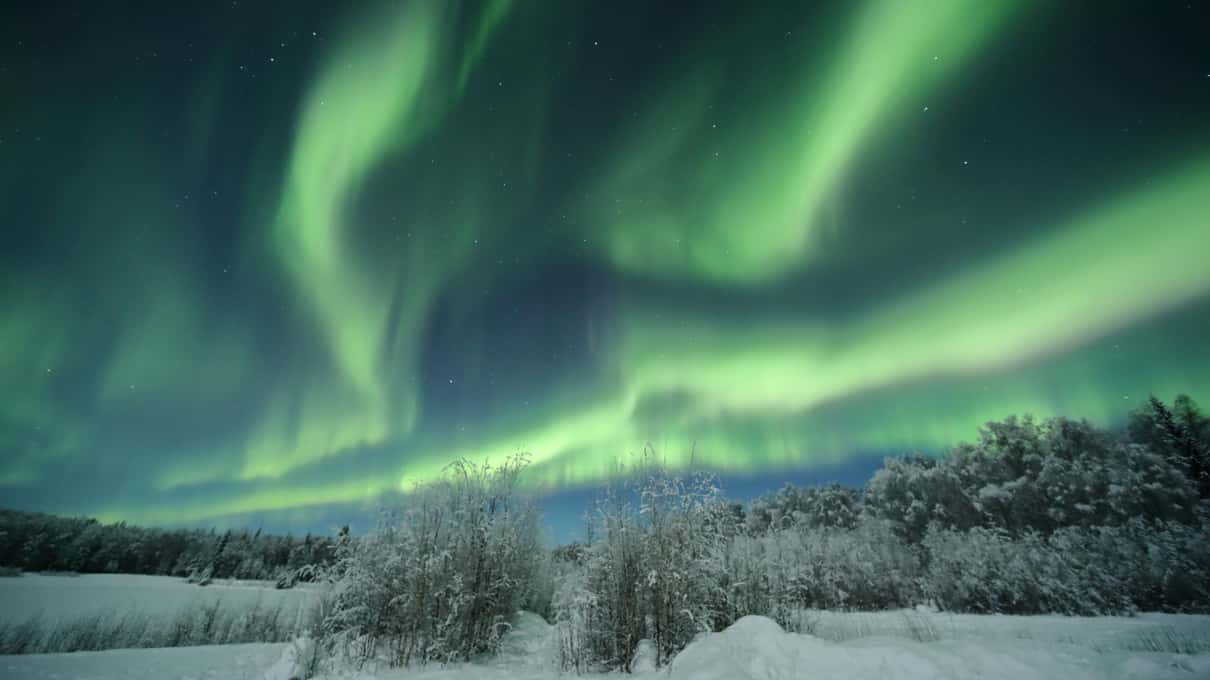
Yes. Fairbanks lies at about 65° N, close to the band of sky where the aurora appears most often, and on an active night it can fill the sky over any dark hillside within reach of town. A tour sells you something narrower, a driver who handles icy roads at 3 am and someone whose job is to work out where the clouds are not.
Plenty of visitors do both jobs themselves with a rented car and a thermos of coffee. Others spend a night in a hotel parking lot staring at streetlight glow. The difference is mostly preparation.
Driving a rental car in a Fairbanks winter
From November to March the roads around Fairbanks are packed snow and ice for weeks at a time. Ask the rental company before you book whether the car has studded or proper winter tires, and be wary of plain all-season tires. Four-wheel or all-wheel drive helps you get moving from a snowy pullout. It does nothing to help you stop, so leave long gaps and brake early.
Then there is the cord. Many cars in Fairbanks have a block heater, an electric element that keeps the engine warm, with a plug poking out of the front grille, and hotel parking lots often have an outlet at each space. At −20 °F (−29 °C) a car left unplugged for hours may refuse to start, so plug it in whenever you park for the night and ask the rental desk how theirs works. Read the rental agreement too, since some contracts exclude certain roads.
Drive the route once in daylight if you can. A road that feels easy at noon looks very different at 2 am with snow blowing across it, and knowing where the pullouts are saves you from hunting for one in the dark.
Where people head on a clear night
The aim is to escape the city glow and gain a wide view of the northern sky. People head to Cleary Summit, on the Steese Highway north of town, where the heated glass house from our comparison also sits. Murphy Dome, northwest of town, is the other well-known dark spot. Both are hills above the valley, and both can be busy with other watchers and their headlights on a strong night.
We leave out directions on purpose, since pullouts and access change with the snow. Check a current map in daylight. The sky above the spot matters more than the spot itself. If the cloud forecast shows the hills socked in, a clear sky in another direction beats a famous viewpoint under cloud. Reading the aurora forecast shows how to check the activity and the clouds before you set off, and when to see the aurora covers the moon and the darkest weeks.
Staying safe on a night drive
Most self-drive trouble is ordinary winter trouble, made worse by darkness and tiredness.
- Pull fully off the road. Use a proper pullout or parking area. Never stop on the highway itself, and never stand in the lane for a photo, because a truck coming over a rise will not see you in time;
- Watch for moose. They walk the roads at night and are hard to see against dark trees. Slow down wherever the road runs through forest;
- Tell someone your plan. Cell signal fades in places once you leave town. Leave word of where you are going and when you expect to be back;
- Mind the fuel and the exhaust. Keep the tank at least half full and carry a sleeping bag or a heavy blanket. If you idle to stay warm, make sure snow is not blocking the tailpipe, since exhaust can build up inside the car;
- Know the signs of frostbite. A white, waxy patch on a cheek or the tip of the nose means it is time to get back in the car. Check each other's faces, since you rarely notice your own. Dressing for a night at −20 °F covers the layers;
- Stay sharp for the drive home. The drive back comes after hours in the cold. Swap drivers, or rest in a safe spot if you are nodding off.
Watching from the hotel
The lowest-effort version is to stay put. Some Fairbanks hotels and lodges offer an aurora wake-up call, where the front desk rings your room if the lights appear, so ask at check-in whether yours does. Lodges outside town have darker skies. From a downtown room the streetlights hide all but the stronger displays.
Without a call service, set an alarm for around midnight and look out of the window. It costs nothing and can pay off on a strong night, but it cannot move you out from under a cloud.
What a guide adds for the money
The main thing is judgment about the sky. A good chase guide sets the aurora forecast against the satellite cloud maps, then decides which way to drive. Arctic Night Tours will go two or three hours each way when it has to, toward Denali or to the north, which few visitors would try alone on winter roads at night.
The extras add up too. Guides know the pullouts, and some tours have a viewing site of their own. They photograph you under the lights, and on Arctic Night Tours' chase from ~$225 the pictures are free. Some tours bring heat you cannot carry in a rental car, such as the mobile lodge that follows SkyChase on most nights or the heated shelter at Electric Moose Studios.
| Question | On your own | Guided chase |
|---|---|---|
| What you pay | Your rental car and fuel | ~$225–335 per person |
| Choosing where to go | You read the forecast and the cloud maps | The guide decides, and moves if clouds arrive |
| Driving on ice at 3 am | You, after hours in the cold | The guide, while you rest |
| Warmth | Your car and your layers | A heated van, on some tours a shelter or a lodge |
| Photos | Your own | Taken by the guide on all three chases |
| A night with no aurora | Costs you sleep | Full price on most; SkyChase offers a refund or retry, Electric Moose a free second tour |
A guided first night, then your own
Arctic Night Tours' all-night chase (from ~$225) lets you watch how a guide reads the sky and picks a spot before you try it yourself. Free cancellation runs until 24 hours before, so you can wait for the forecast.
The self-drive glass house
A halfway option sits on Cleary Summit. The glass house listing on Viator has a self-drive option, and that is where its lowest price comes from. You drive up yourself and wait in a heated room with a bathroom while guides watch outside and call you out when the lights show. With hotel transport it costs ~$179 on GetYourGuide or Viator. The catch is that it stays on one hill whatever the clouds do, and you still drive home on winter roads after midnight. Chase by van or wait in a cabin weighs that trade.
A fair verdict
Doing it yourself suits a confident winter driver with several nights in town and a car on proper tires. For a first visit, book a guide for at least one night. Take it early in your stay, watch how the guide reads the sky and where they stop, then spend your other nights on your own.
If you have never driven on ice, or you travel with small children, the guided night is the safer bet, and kids, seniors and the long night covers which tours suit whom. What an aurora tour costs sets the fares side by side, and photographing the aurora has the camera settings for a hilltop of your own.