Dressing for a night at −20 °F
An aurora night is mostly standing still in the dark, and at −20 °F (−29 °C) stillness is what makes you cold. None of the tours on this site lends you a parka or boots, so whatever keeps you outside comes from your suitcase or a rental shop in town. The layers below are the ones that hold up through a long wait.
Why standing still is the cold part
Walking to the van at −20 °F (−29 °C) is bracing but fine. The trouble starts when you stop. On an aurora night you spend long stretches standing in snow with your head tilted back, and your body makes far less heat than it does on the move. Midwinter night lows in Fairbanks average around −10 °F (−23 °C) to −13 °F (−25 °C), and a cold snap can push them 20 °F (11 °C) lower, so from December to February a night at −30 °F (−34 °C) is quite possible, and −40 °F (−40 °C) is not unheard of.
No tour on this site hands out parkas or boots. The vans are heated, and some tours add a shelter or a lodge, but the time you spend outside when the sky lights up depends on what you packed. Dress for that stretch, not for the drive. If you are hunting the lights on your own, the car is your only shelter, so the same rules apply with more force.
Layers from the skin out
The system is the one that works anywhere cold, only thicker. Each layer traps air, and you can open or shed layers in the heated van without starting over.
- Base layer. Long underwear top and bottom in merino wool or a synthetic fabric. No cotton anywhere, socks and T-shirts included, because cotton holds sweat against your skin and then chills you;
- Mid layer. A fleece jacket or a light down sweater over the base. On the coldest nights, add a second one;
- Parka. A long insulated coat with a hood, reaching at least to mid-thigh. A short ski jacket leaves your seat and thighs exposed when you sit on a snowbank;
- Insulated pants. Snow pants or insulated overpants on top of the base layer. Jeans are the classic mistake.
The one trap is sweat. Heated vans run warm, and if you sit in full gear for an hour you step out damp, and the damp turns cold fast. Unzip the parka and pull off the hat in the van, then close everything up a few minutes before you get out.
Boots and socks
Feet go first. Look for insulated winter boots rated well below zero, with a thick sole between you and the snow, and get them big enough for thick socks with room to wiggle your toes. A tight boot squeezes the blood out of your feet, and cold toes follow within minutes however good the boot is.
One pair of thick wool or synthetic socks over a thin liner beats two thick pairs jammed in. Pack a dry spare pair for the long tours, since damp socks lose much of their warmth. Chemical toe warmers help on a still night, as long as the boot leaves them a little room.
Keeping hands and face warm
Mittens keep your fingers together so they warm each other, which is why they beat gloves at these temperatures. Wear thin liner gloves underneath, so you can pull a mitten off to work a phone or a camera for a few seconds without bare skin touching cold metal. A chemical hand warmer inside each mitten makes a long wait far easier.
A hat that covers your ears fully, plus a neck gaiter or a balaclava you can pull up over your nose, protects the parts that freeze first. Children chill faster than adults and often say so later, so check their hands and faces more often, and kids, seniors and the long night has more on keeping them comfortable.
Electric Moose Studios hands out hand and toe warmers along with headlamps, the only one of the six tours that lists them. For the others, buy warmers in town before your first night. They weigh almost nothing.
Frostbite starts quietly. The first sign is usually a white or waxy patch on a cheek or the nose, and the person who has it rarely feels it. Check each other's faces every so often. If you spot a patch, head back to the van and let the skin warm gently, without rubbing it. Tell the guide as well.
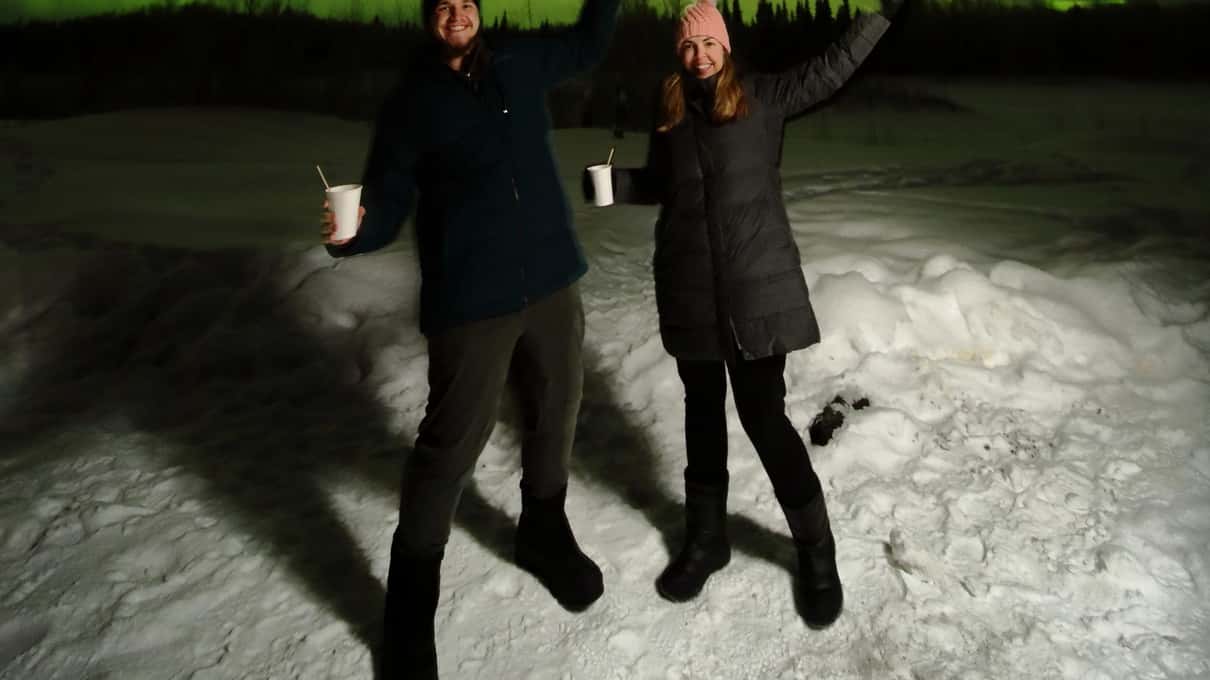
Renting gear in Fairbanks
If you live somewhere mild, buying a parka and boots for one trip is expensive and bulky. Fairbanks has shops that rent cold-weather gear, parkas and boots among it. Ask your hotel which one guests use, and ask the shop whether to reserve ahead. Rental is never part of a tour fare, so add it to your budget. What an aurora tour costs lists the other extras.
Bring the small things from home anyway. Base layers, socks, a hat and mittens are cheap to buy and small to pack, and they decide more of your comfort than the parka does.
A chase with somewhere to warm up
SkyChase (from ~$335) brings fire pits, and usually a heated lodge on wheels trailing the vans, so the cold comes in shorter doses. Both can be dropped when the weather demands it, and the booking is free to cancel up to 24 hours ahead.
Phones and batteries in the cold
A phone battery loses charge fast at −20 °F (−29 °C), and a phone that showed 80 percent in the van can shut down after a few minutes outside. Keep it in an inner pocket against your body and bring it out only for the shot. A small power bank in the same pocket revives a dead phone once both warm up. Camera batteries behave the same way, and photographing the aurora covers spares and fogged lenses.
Packing for Chena Hot Springs and the Arctic Circle
The hot springs night needs a second kit. Tour Fairbanks' Chena trip at ~$231 asks you to bring a swimsuit and a towel, and its price covers the coins for the lockers. Pack a hat for wet hair, which frosts over fast in the open air of the outdoor rock lake. Keep the full winter layers with you too, because the aurora stops come on the drive back to Fairbanks after dark. Chena Hot Springs by night has the rest of the evening.
The Arctic Circle trip is the opposite problem. Midnight Sky Adventures at ~$379 spends 13–14 hours mostly in the van, with short stops outside at the sign and the Yukon River. Wear layers you can open in the van and close quickly at a stop, and keep the parka and boots within reach for the aurora stops on the way home. The listing provides no winter clothing. To the Arctic Circle and back covers the long day.