When to see the aurora
The aurora over Fairbanks never switches off, but from May to July the sky stays too bright to show it. Between late August and mid-April the question is which trade you prefer, long nights against deep cold, or autumn water against the clearer skies of late winter.
Late August to mid-April
Fairbanks sits at about 65° N, and that latitude cuts both ways. In June the sun barely dips below the horizon, so the aurora goes unseen against a bright sky. Around the December solstice the town gets less than four hours of daylight. Aurora tours run in between. Arctic Night Tours operates from late August to late April, and most others wind down around mid-April. Electric Moose Studios leaves its booking calendar open through the summer, but from May to July no tour can show you the lights, so check your dates before paying.
Inside that window each month offers a different mix of darkness and cold, with cloud and moonlight layered on top. No single month wins on every count. The forecast guide deals with the decision on the night; this one is about choosing the dates.
The months compared
| Month | Usual night low | Darkness | Notes |
|---|---|---|---|
| Late August | Mild, above freezing | A few dark hours around midnight | Season opens; Arctic Night Tours starts |
| September | 35 °F (2 °C) | Lengthening fast | Equinox month; aurora over unfrozen lakes |
| October | 18 °F (−8 °C) | Long | Often the cloudiest month; Arctic Circle trips begin late in the month |
| November | −2 °F (−19 °C) | Long | Snow on the ground, hard cold arrives |
| December | −11 °F (−24 °C) | Longest; under 4 h of daylight at the solstice | Dog-sled night opens December 1 |
| January | −13 °F (−25 °C) | Long | Usually the coldest nights |
| February | −10 °F (−23 °C) | Long | Late winter skies are often clearer |
| March | 0 °F (−18 °C) | Shortening | Equinox month; dog sled ends March 31 |
| April | 21 °F (−6 °C) | Short again | Most tours stop mid-month, Arctic Night in late April |
The lows are typical values, not limits. A cold snap can push a night 20 °F (11 °C) below them, and in midwinter that means −30 °F (−34 °C) or lower.
September and the autumn equinox
September has a long-standing reputation among aurora watchers for lively displays around the equinox, and March shares it. Treat that as a tendency rather than a rule. What September does give you is milder air, near freezing at night instead of far below it, and lakes and rivers that have not frozen yet, so a strong display can double itself in still water. The nights are shorter than in winter but grow quickly through the month. October follows with the first snow and, often, the heaviest cloud of the year, which makes it a month to plan around rather than for.
Long nights and deep cold in midwinter
From November to January the dark seems endless, and an active sky can show up at any hour of it. The price is the cold. Usual night lows sit between −2 °F (−19 °C) and −13 °F (−25 °C), and on a chase you stand in it for an hour at a time. For a midwinter trip, read our clothing guide before you pack and lean toward tours with somewhere warm to retreat to. Chase or cabin compares them.
Two tours keep to the colder part of the year. The Arctic Circle day with Midnight Sky Adventures, from ~$379, runs from about late October to early April with 11–14 departures a month, so book early if your dates are fixed; our Arctic Circle guide describes the day. The moonlight dog-sled night at ~$320 runs from December 1 to March 31 only and needs at least four guests to go ahead. Booked on Viator, it is non-refundable.
Late winter and the spring equinox
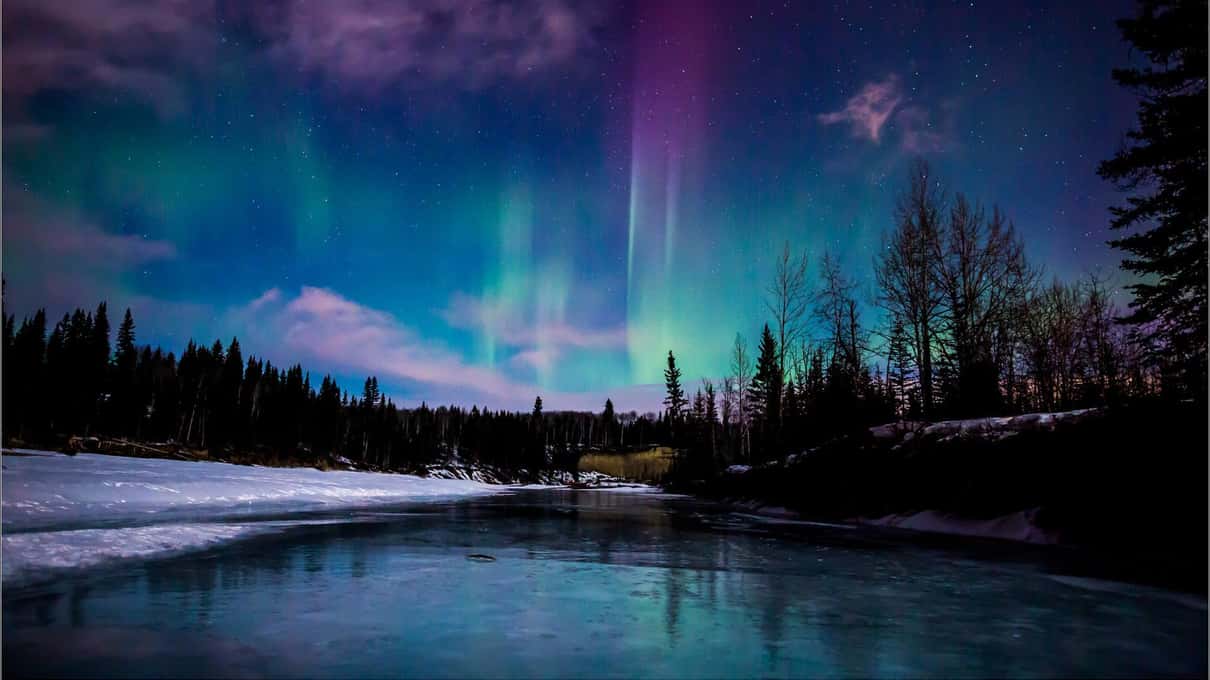
February and March are the months we would choose for a first trip. Late winter skies over the Interior are often clearer than autumn ones, while the nights stay long. The cold eases too, from about −10 °F (−23 °C) in February to around 0 °F (−18 °C) in March, and March brings the spring equinox with its reputation for active nights. By April the nights shrink fast and the usual low climbs to about 21 °F (−6 °C). Most tours stop around the middle of the month.
Late October to early April only
Midnight Sky Adventures gives each of its six guests a window seat for the Arctic Circle day and looks for the aurora on the drive back, from ~$379. With only 11–14 departures a month, dates fill.
The moon and the dark weeks
A full moon lights the snow so well that you can walk without a headlamp, and the same glow drowns faint aurora. Strong displays still show through it, but the quiet arcs that fill many nights fade into a pale sky. The days around a new moon are the darkest, and if your dates are flexible, aim for them. Moonlight is not all loss, since it brings out the landscape in photos; our photography guide covers shooting under both.
Which hours to stay awake
The hours either side of local midnight tend to bring the strongest displays, because that is when Fairbanks lies under the busiest stretch of the oval. Activity can still start whenever the sky is dark, from early evening in December to the small hours in September. Tour times follow that pattern. Chase pickups fall between 8 and 10 pm, and the vans stay out well past midnight. On the Chena night the aurora stops come during the late drive home. If you plan to look on your own, our guide to hunting without a tour has the safety basics.
Choosing your dates
- First trip, flexible dates. Late February or March, near a new moon, with three or four nights in town;
- You dislike the cold. September, accepting shorter nights and no snow, or late March;
- You want the longest nights and the dogs. December or January, dressed for −20 °F (−29 °C) and below;
- You want the Arctic Circle as well. Any time from late October to early April, booked well ahead.
Whatever the month, put your first tour near the start of the trip, so that one grey evening does not use up your only chance. Every tour price in one table helps you plan how many nights you can pay for.